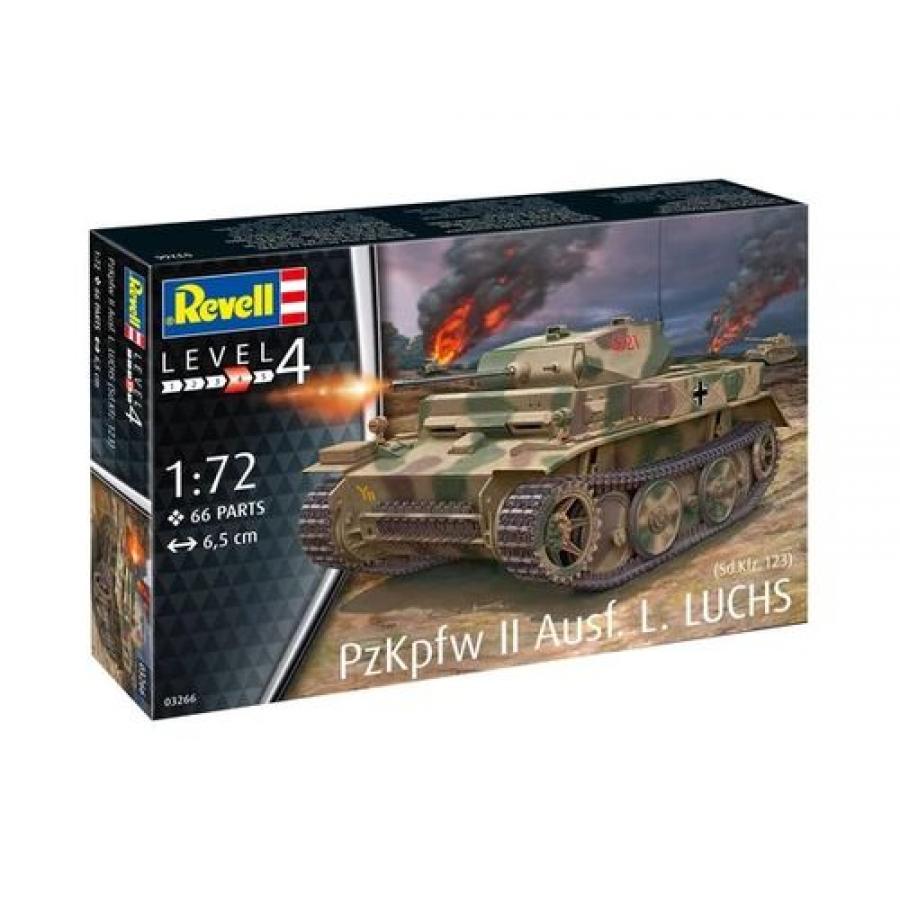
The PzKpfw II (Panzerkampfwagen II) was a German light tank of World War II. The first prototypes of the vehicle were created in 1934 and serial production continued in the period 1935-1944, ending with the production of about 1,850 cars. The A version of the tank was powered by a Maybach HL 57 TR engine with a capacity of 130 HP. It was armed with 1 20 mm KwK 30 cannon and 1 7.92 mm MG 34 machine gun. mounted in the turret.
The PzKpfw II was created as a result of a competition announced by the German Armaments Office for a light tank weighing up to 10 tons, armed with a 20 mm cannon. The competition was won by MAN in cooperation with Daimler-Benz. Serial production began in 1935, and during it many variants of the PzKpfw II tank were created. Chronologically, the first was the A version, but it was produced in relatively small quantities. Soon after, the B version was created, which already had a new, more powerful engine and a changed chassis. Already in 1937, the C version was created, with a substantially changed chassis and reinforced frontal hull armor. At the end of 1940, the F version was created, which had stronger armor and a better gearbox than the C version. In 1942, the production of the L ("Luchs") version began, which had a completely new chassis, a new 180 HP engine and a significantly increased maximum speed - from 40 km/h to 60 km/h. Many other vehicles were also built on the PzKpfw II chassis, such as the Wespe self-propelled howitzer or the Marder II tank destroyer. PzKpfw II tanks were used on almost all fronts of World War II and from 1942 were assigned to secondary tasks.