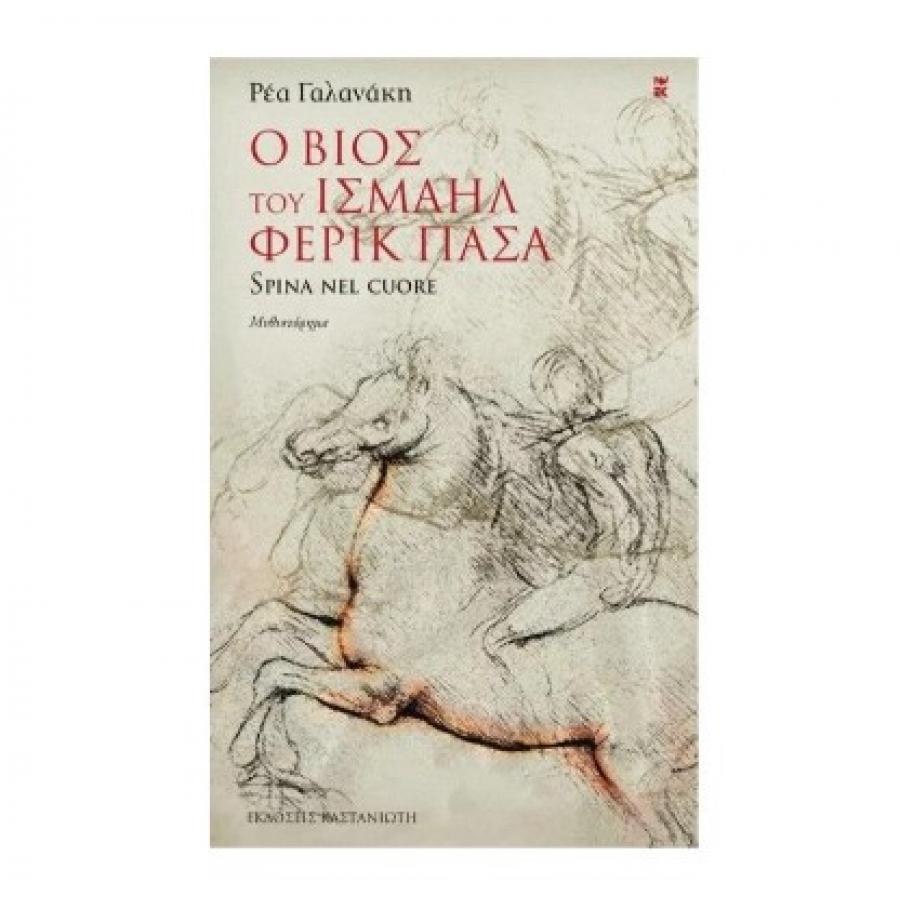
The captivity of a boy, his change of religion and his career in administration were not an unusual phenomenon in the Ottoman Empire. The case of Ismail Ferik Pasha was, perhaps, different. Half a century after his captivity, he returned to his native Crete, as leader of the Egyptian army, to suppress the revolution of 1866-1868. During it, however, he was assassinated or killed. His brother, with whom he had been captured together but whose fate had a different path, financed and animated the same revolution from Athens. As is the case with figures who move on the fringes of History, the gap in written information is covered by oral variations and myth, leaving all the necessary cracks for the entry of literature. The work closely follows the variations, the myth and the specific historical events, thus synthesizing, with the "strict freedom" of art, from the real dramatic life of Ismail Ferik Pasha to its fictional dimension.
Language Greek