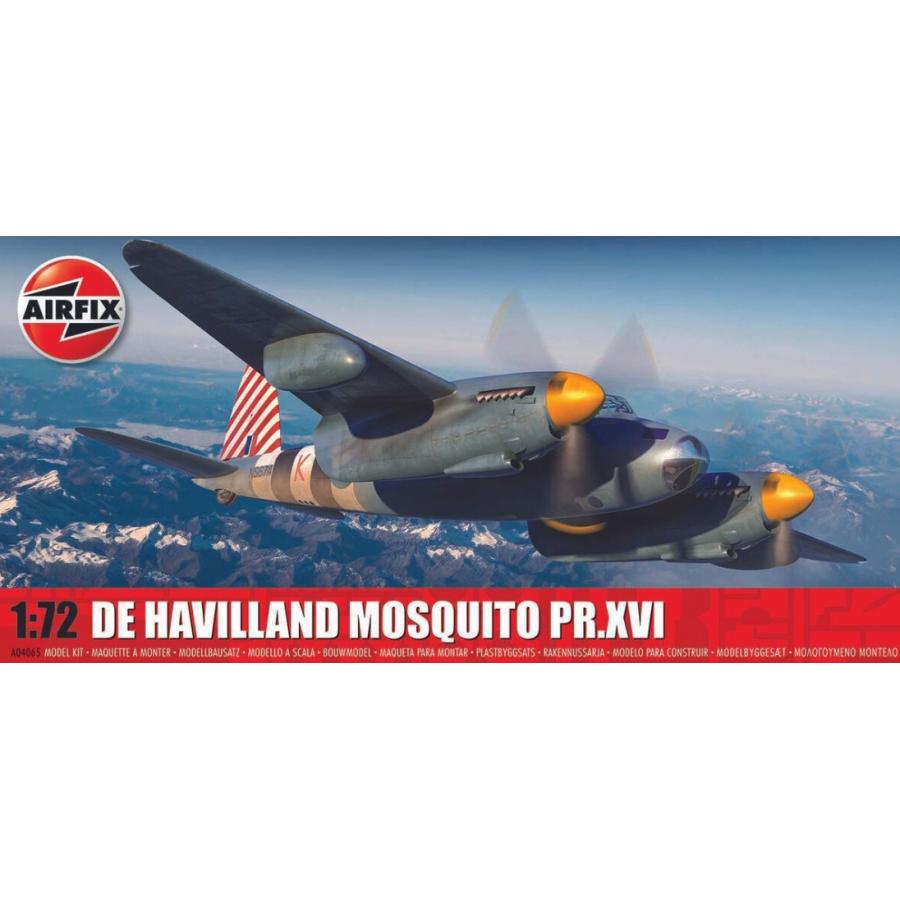
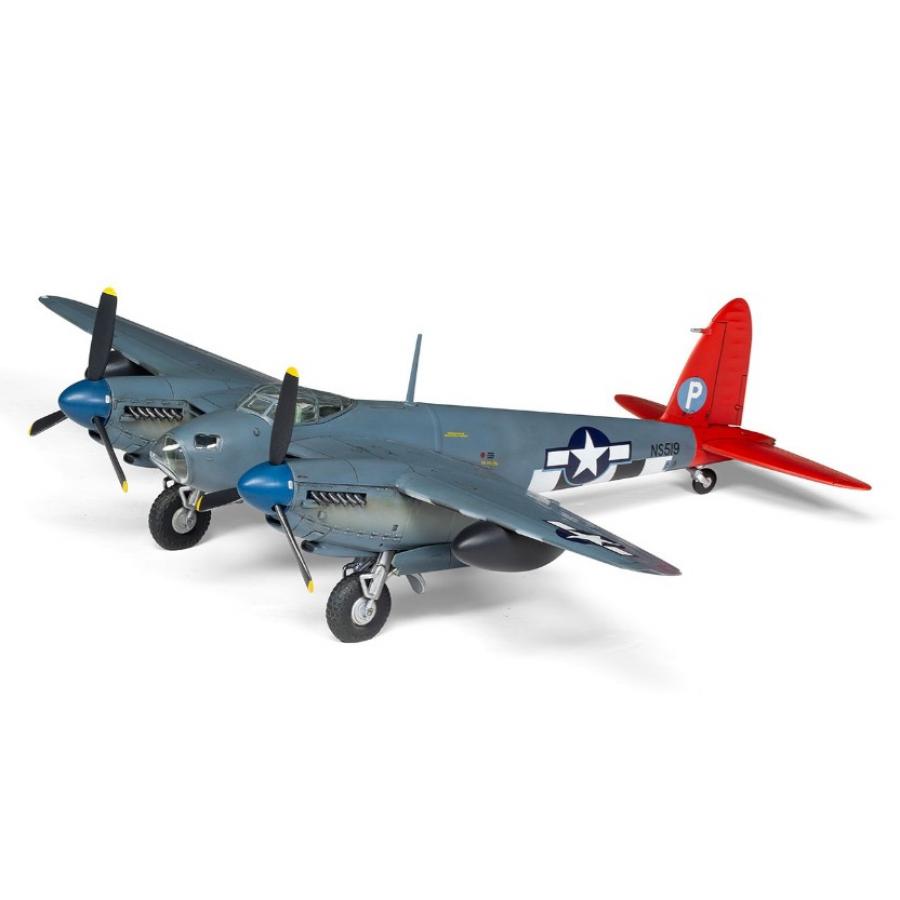
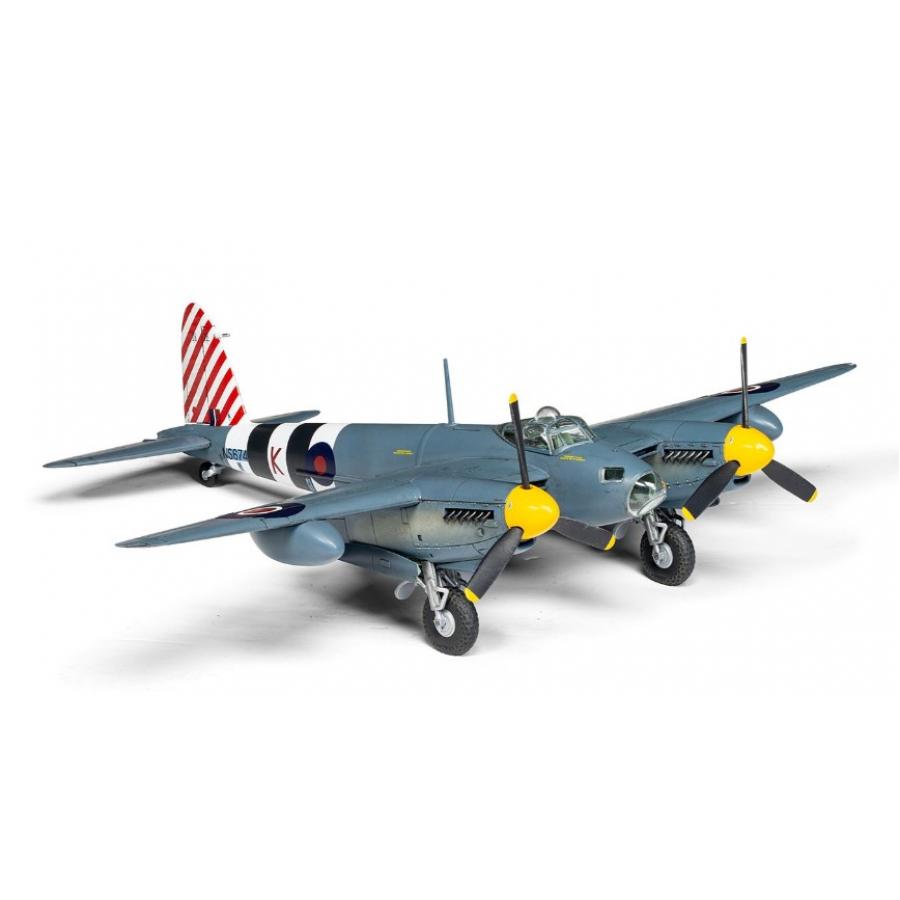
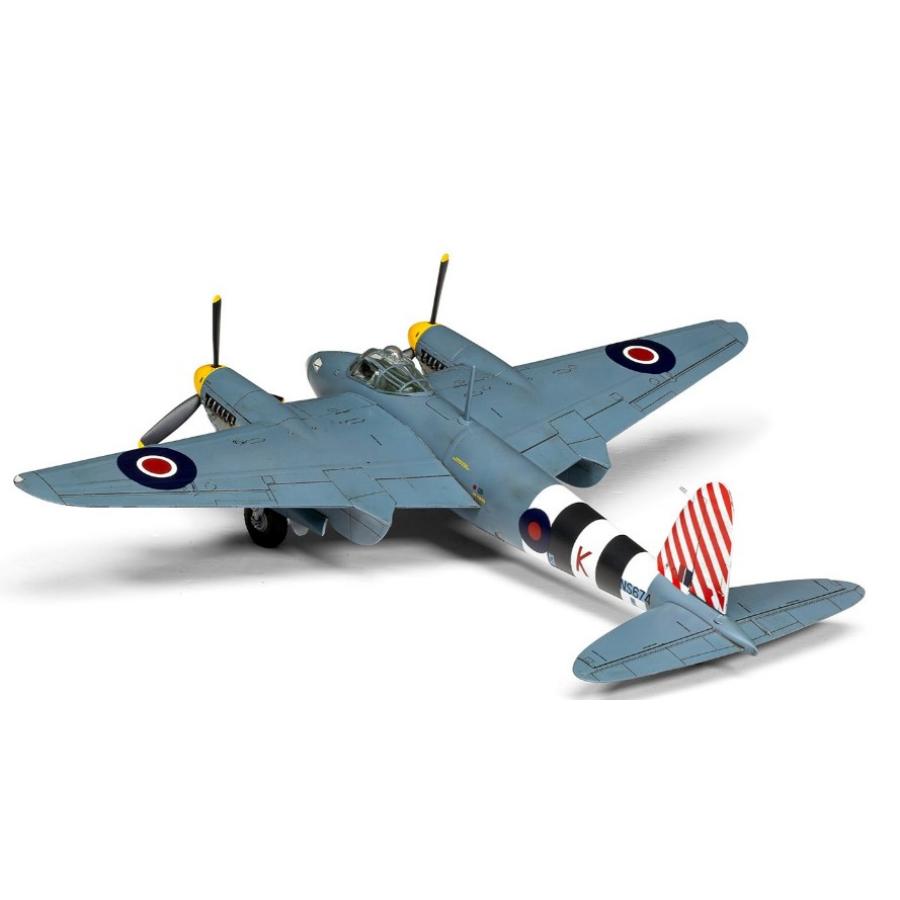
The De Havilland Mosquito is a British, twin-engine, multi-role aircraft with a mixed structure, mainly wooden, with a classic tail. The prototype flew on November 25, 1940, and the first machines entered the line units in July 1941. The machine was largely made of wooden elements glued with casein glues and later with synthetic ones. Thanks to this, the machine was very light and showed excellent aerodynamic properties. Interestingly, it also turned out to be quite resistant to anti-aircraft fire. For this reason, the Mosquito quickly earned the nickname "wooden miracle". Two Rolls-Royce Merlin engines of different variants with power from 1460KM to 1680KM were used as propulsion. During the war, about a dozen versions of this very successful aircraft were created. The most important of these are, among others, Mosquito PR.IX (reconnaissance version), B.IV series I and II (bomb version), F.II (hunter version), NF.II (night fighter with AI.IV radar), one of the most widely produced - FB .VI (fighter-bomber version). Mosquito aircraft performed many functions in the RAF, but the fighter-bomber and bomber versions were the most famous, which made daring raids on German public installations (e.g. police or Gestapo headquarters) in occupied Europe, often with surgical precision. Technical data (Mosquito F. Mk.II): length: 13.57m, wingspan: 16.52m, height: 5.3m, maximum speed: 610km/h, rate of climb: 8.8m/s, maximum range: 1500km, maximum ceiling 8800m, armament: fixed - 4 cal.7.7mm machine guns and 4 cal.20mm Hispano Mk II cannons.