Shopping Cart
Your shopping cart is empty!

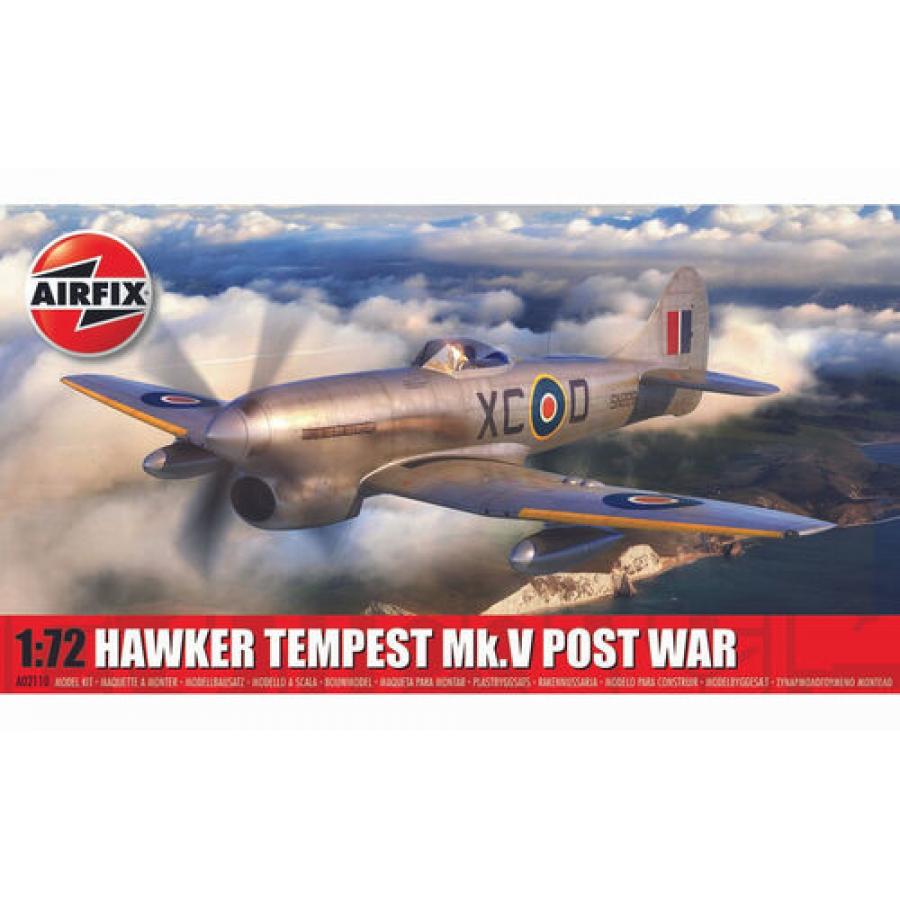
The Hawker Typhoon did not perform well as a fighter aircraft, but it later served successfully as a fighter-bomber, especially when equipped with rocket launchers. Its high-altitude performance and rate of climb were unsatisfactory, and in 1941, efforts were made to address this by using a thinner airfoil wing with an elliptical planform. The engine radiator was moved from under the engine to the wing root edges, and the Napier Sabre C.107C engine was selected as the powerplant.
Since the new wing had reduced fuel capacity, additional fuel tanks were installed in the fuselage. The modifications were so extensive that by early 1942, the aircraft was renamed the Hawker Tempest. The prototype Tempest flew in February 1943, soon achieving 750 km/h at 7,470 meters altitude. RAF service for the Tempest began in April 1944. The aircraft’s squadrons participated in preparations for the Normandy invasion, which were interrupted by the first V-1 attacks on 13 June 1944. Tempests were then directed to combat this new threat.
The success of the Tempest can be measured by the number of V-1s destroyed: between June 1944 and March 1945, 481 kills were recorded. By the end of the war, Tempests were operating across Europe in support of ground forces. Notably, 20 kills were recorded against German Messerschmitt Me-262 jet fighters.
During the war, the Tempest served in only three RAF squadrons: 3, 486, and 56. The only mass-produced version during 1943–1945 was the Mk.V, while two other versions (Mk.II and Mk.VI) entered production after 1945 and served until 1951.
Technical specifications (Mk.V):
Length: 10.26 m
Wingspan: 12.49 m
Height: 4.9 m
Maximum speed: 695 km/h
Rate of climb: 23.9 m/s
Maximum range: 1,190 km
Service ceiling: 11,125 m
Armament:
Fixed: 4 × Mk.II cannons
External: up to 454 kg of bombs or 8 × RP-3 rockets